




-
Sorrel1 Product
-
Spinach3 Products
-
Huazontle1 Product
-
Turnip Greens1 Product
-
Vegetable Mallow1 Product
-
Chard7 Products
Chard, and All Sorts of Leafy Greens for Cooking:
The best known (and one of the easiest to grow) leaf green for cooking has to be Chard, but there are many others that are quick and tasty too. It’s worth scrolling down, as there are all sorts of other interesting greens listed here.
Once you’ve tried all these, don’t forget the Kale, Oriental Greens, and Mustard Greens (which have their own pages) too.
Sorrel
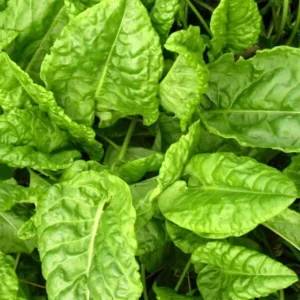 ‘Belleville’ Leaf Sorrel
We would really encourage you to try this rather fine vegetable. Very easy to grow, producing clumps of pale green leaves with a good sharp lemon flavour - great in salads, as a lettuce substitute in sandwiches (doesn't go limp) and also very good cooked in soups and sauces.
One of the earliest green crops to start in spring and perennial - once you've got a clump going it needs no attention other than when you want to eat it. Hardy, early salad. Lemony!
Hardy, early salad or cooking leaf green, very easy to grow.
 approx 800 seeds £2.56
Sowing Information
(swipe to scroll)
Spinach
 “Monstreux de Viroflay” Giant WINTER Spinach
Tried and tested for over 200 years, this is the original variety, unchanged from the 1800's - here's the engraving in our copy of 'The Vegetable Garden' of 1885. It's a large-leaf spinach for sowing in late summer and harvest November to Spring.,and will benefit from rich soil as it grows really big so needs plenty of fertility.
This is Winter Spinach, a cool-weather plant.. You sow it at the end of summer, for use over winter. Don't try to sow winter spinach in Spring, as it would bolt (go to flower) as soon as the weather warms up. But sowing this at the end of summer should give you large amounts of tender spinach over winter.
500 seed £2.47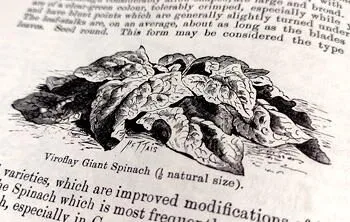
Sowing Information
(swipe to scroll)
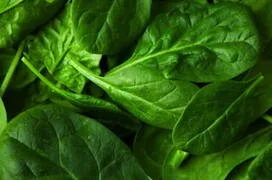 “Securo” SUMMER Spinach
Summer spinach is sown early, from spring-time onwards, to give an early crop of tender leaves for salads, and cooking. It prefers cooler waether - don’t let it get short of water or it will run to flower too soon.
Really nice in salads or cooked.
500 seed £2.57Sowing Information
(swipe to scroll)
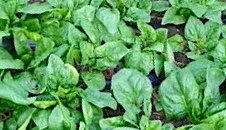 “Winter Giant” Spinach
We are really pleased to have found a source of Winter Spinach with good germination, and what is a well-maintained line of stock seed.
This modern variety is related to the old heirloom "Monstreux de Viroflay" - famous for its huge tender leaves for use over winter - that has been carefully improved by traditional breeding methods. It has been reselected and is less likely to bolt if the weather gets hot.
Just to be clear , this is Winter Spinach, a cool-weather plant.. You sow it at the end of summer, for use over winter. Don't try to sow winter spinach in Spring, as it would bolt (go to flower) as soon as the weather warms up. But sowing this at the end of summer should give you large amounts of tender spinach over winter.
generous 500 seed £2.61Sowing Information
(swipe to scroll)
Huazontle
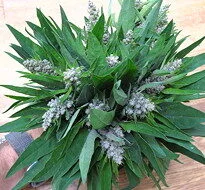
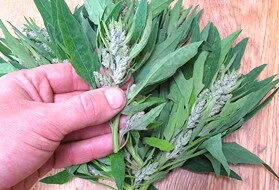 Huauzontle (Aztec Broccoli!)
Delicious edible leaves, but the best bits are the flowering shoots. They can get about 3 to 5 ft tall, and almost as wide. The leaves go red as nights cool, looking very pretty.
Easily picked, just take the top 3 inches of each flower stem (which will have both leaves and flowers) and cook like spinach or chard. They keep a great texture when cooked, with a very slight crunch to them. Not chewy - but they just don't go completely soft the way that for example spinach does. So a great thing to mix in with rice, potato cakes, couscous or stir-fries, as an easy way to make a very simple and plain dish seem really special.
Search on the internet for 'Huauzontles' for lots of Mexican recipes for fritters and more! But they're great cooked simply and quickly like spinach. We plant around half a dozen plants in our home garden each summer, to supply us with shoots from mid-summer right through to the middle of October.
Botanically speaking, this is Chenopodium berlandieri. The baby plants look very similar to the weed Fat Hen - so don't weed them out by mistake!
 200 seed, organic. £2.35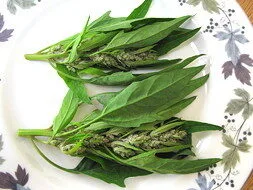
Sowing Information
(swipe to scroll)
Turnip Greens
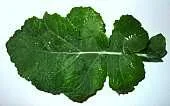 Turnip Greens (also known as ‘Rapa Senza Testa’)
Turnip Greens are a really good green from central Europe. A quick alternative to Chard or Kale, ready about 4 weeks from sowing,with mild green leaves that have a wonderfully buttery flavour when cooked, and are also nice and mild if used raw in salads.
Unlike chard it doesn’t take up space for months on end, so you can just throw in a quick row here & there as a catch crop. If grown overwinter the flower shoots in spring are delicious like sprouting broccoli.
Great quick green - give it a go, we think you'll like it! Not ‘turnip-flavoured’ - just a wonderful green on its own.
at least 350 seed, organic. £2.27Sowing Information
(swipe to scroll)
Vegetable Mallow
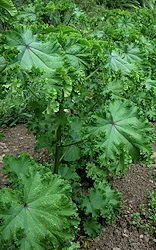 Vegetable Mallow
With this variety we think we've found a winner. It grows really well , looks handsome, and - the key thing - tastes really good and is an excellent addition in the kitchen.
The seed is sown from mid to late spring. We start it in modules since (as with most greens) slugs can be a problem for baby plants, but as soon as it is beyond seedling stage it really gets going and is an easy source of greens - absolutely loads of big, curly edged leaves - they can be used for salad when young, but we think they're best cooked.
You'll need to allow the plants plenty of space and pick them regularly, as they get pretty big, to 4 feet. Just to avoid any disappointment or confusion, the plant doesn't make much in the way of flowers - they're very small and insignificant - but it's still a good looking plant.
Unusual, tasty leaf green, exceptionally productive. Good texture and flavour.
100 seed, organic. £2.27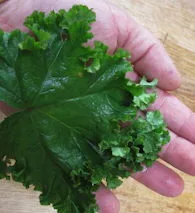
Sowing Information
(swipe to scroll)
Chard Seed (Also Leaf Beet, Spinach Beet, or Perpetual Spinach)
We are very fond of Chard, it provides a great cooked green for nearly all of the year, easier than spinach. One of our ‘must have’ crops, such a good return from even a little space.
Sowing Information
When to sow chard? Two sowings: First sow in spring for crops through summer and autumn. Or alternatively, sow after midsummer, for the heaviest production over winter and through to the following spring.
(swipe to scroll)
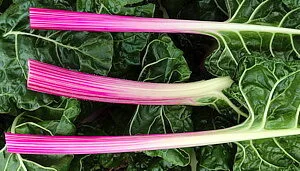 Candy-Striped Chard
This strain is grown for us by Trill Farm Organic Garden, and they have selected for a small amount of yellowy-orange stem colour in some of the plants for a bit of added interest.
You'll mostly get pink and white stripes, but with a few rainbow-orange as well!
approx 200 seed, organic. £2.99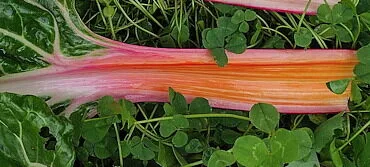
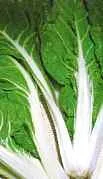 Fordhook Giant Chard
Large glossy dark green leaves and wide white stems - a productive plant with tender leaves that reduce less on cooking than other similar greens. Very good value, cropping over a long period.
The unusual thing about this particular strain is that it has very sweet stems. Its nice to eat straight off the plant in the garden, and the stems are also noticably sweet when cooked.
Great in stir-fries & stews too. Dark green, medium white stem.
250 seed £2.19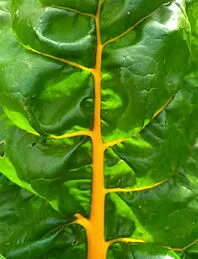 Golden Chard
A fantastic new chard bred specially for home gardeners. We liked it in our trials because it has really strong colouring on its stems, as well as a good texture and flavour.
The leaves are a nice deep green, and it is very vigorous, making lots of leaves. The deep gold stalks even keep their colour well after cooking.
Very beautiful, as well as tasty. Seed grown for us by Trill Farm Garden.
at least 100 seed, organic. £3.24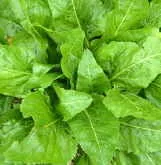 Leaf Beet (aka ‘Perpetual Spinach’)
This variety of chard is bred to have minimal stem (and maximum leaf) for picking and cooking like spinach. Great for repeated cutting and one of the easiest and most productive vegetables for a a small space. A sowing in late spring can provide greens for almost a whole year, until the plants bolt the following spring.
Light green leaves, minimal stem
300 seed £2.10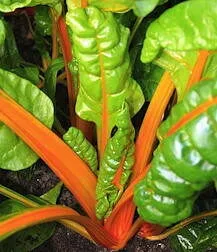 Orange Sunset Chard NEW
We have a lovely orange chard for you to try this year, small-batch organic seeds from the seedhouse of DeBolster, who specialise in breeding varieties for home-garden growers. Glowing orange-yellow stems and dark-green leaves, this has been selected for cold hardiness, resisting light frosts overwinter.
What a colour!
about 150 seed, organic. £2.89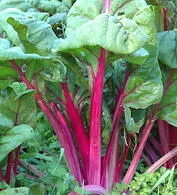 Pink Passion Chard
An amazing chard with shocking pink stems, and succulent dark green leaves.
It was thought to be extinct, but was rescued from a single packet by the dedicated people at Wild Garden Seeds, and after several years’ work, was available again. Now they are retiring, we have taken over its maintenance, growing what we can each year. We love it because not only is it tasty & productive, it is just beautiful to look at in the garden.
Shocking Pink! Back from the brink of extinction; just a small harvest each year.
at least 80 seed, organic. £3.29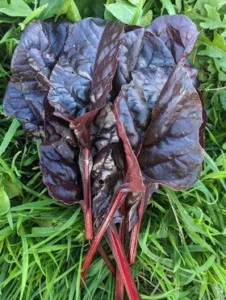 Rhubarb-Red Chard
An extremely striking chard with bright rhubarb-red stems and contrasting dark leaves, it does well in the UK climate.
Bred for home gardeners, this is really beautiful in the veg patch and a row of it makes a great decorative broder.
approx 180-200 seed, organic. £2.55