




Beetroot Seed
Beetroot are a robust, easy vegetable to grow and take about 90 days to mature, so they’re a great one for beginners.
They store well overwinter, and are very easy to cook; there’s no need to peel – just twist off the leaves, pop in a pan and boil – once cooked the skin just comes off . We’ve got a really good selection of these now!
Sowing Information
Plant the seeds outdoors throughout spring and thin to about 6" apart as they grow, taking the thinnings as baby beet. If you leave them all crowded together they'll not make big roots.
(swipe to scroll)
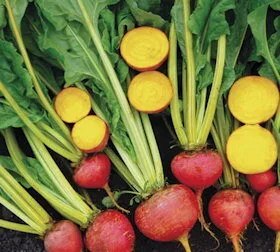 ‘Burpees Golden’ Yellow Beetroot
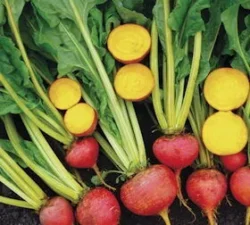
Yellow beet were first introduced in the early 1800's, but this is a slightly more modern improved version that was bred by The Burpee Seed Company in 1970. This has fat cylindrical, really golden yellow roots. Tender and very sweet, in the photo it is simply boiled and served alongside pasta with pesto, garden peas, grated cheese and a touch of black pepper....mmm!
Another great yellow beet, this time with a more cylindrical shape.
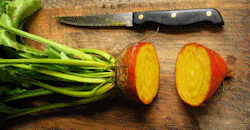 ‘Golden Detroit’ Yellow Beetroot
We really love this variety. Yellow beets used to be widely grown, this is a really vigorous, quick-growing yellow beet from 1828 that makes round, bright yellow roots. It is tender and very sweet.
Although it is of course very nice cooked and sliced, that's not all you can do with beetroot. Here we have also made a raw grated beet and carrot salad, served with pasta & fresh basil pesto , chadwick cherry tomatoes, and garnished with edible borage flowers. (You'll find all the ingredients in the catalogue apart from the pasta) It's the yellow in the middle - what a great colour!
Beautiful & very productive round yellow beetroot. Edible leaves.
 200 seed £2.99

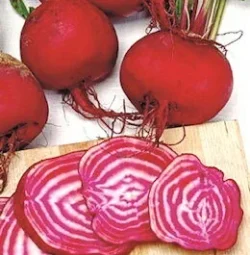
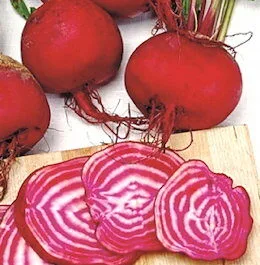 “Bilik” Stripey Chioggia Beetroot - LIMITED
Bilik is a recent reselection of the ‘chioggia’ stripey red-white beetroots, bred for rounder roots and excellent flavour. From France, we have just a few packets for trial. Let us know what you think!
We'll use all your feedback to decide to keep offering them or not.
about 300 seed £2.89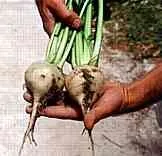 Albino’ White Beetroot
Not just a novelty, this pointy white beetroot is great - no more red stains all over the kitchen. The flavour is just as normal. It is also the most productive and quick-growing beetroot we have found.
Although known since Roman times, this is an improved modern variety for home gardens, and dual-purpose - the succulent green leaves have been bred for use as leaf beet or chard. We often pick the beet in the morning, cook the leaves at lunch, & eat the root for dinner.
White beetroot. Leaves also particularly good to eat.
approx 180 seed £2.89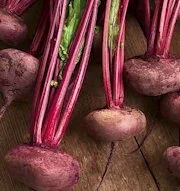 Early Turnip-rooted Egyptian - LIMITED
A famously early flat beet, named because it makes a flattened bulb mostly above ground, reminsicent of the shape of a turnip.
This is an excellently flavoured heirloom from the 1800’s, and it was the quickest to make decent sized beets in our 2024 trial, as well as being very sweet and flavoursome.
Guest varieties are promising new ones we have found, but haven't tested fully yet. This was our favourite new beetroot in 2024, so we're now offering a few packets for you all to try on a wider scale. We'll use all your feedback to decide to keep offering them or not.
about 300 seed £2.49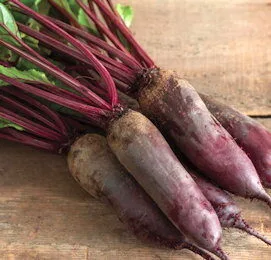 Formanova
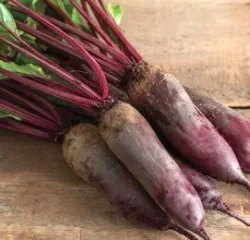
We're pleased to have got some organic seed of this sweet heirloom variety from Switzerland, with long cylindrical roots. This strain has dark red flesh and is carefully maintained & selected by the seedhouse of Sativa-Rheinau.
Let us know what you think of them!
 200 seed, organic. £2.59
 Loki
Loki
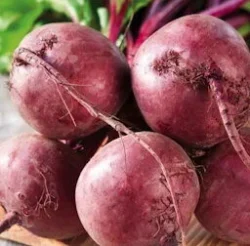
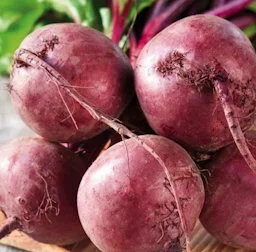
A special reselection of the famous Detroit Red Ball beetroot, this strain from The Netherlands makes large roots that are fatter at the bottom than the top.
Join in with our research! Guest varieties are promising new ones we have found, but haven't tested fully yet. We're offering a limited number of packets as a fun crowd-sourced trial, so let us know what you think of them! We'll use all your feedback to decide to keep offering them or not.
300 seed £2.49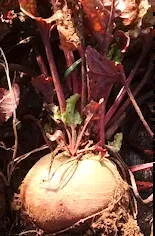 Mulatka
In 2014 Tom Hartley brought us back lots of seeds from Kazakhstan, including several beetroot, and we grew them all out to see what they were like. We did a blind taste-test, trying them all unlabelled, and this one came out as the best-flavoured every time.
It was then a two-year project to bulk it up and produce seed; we grow it, harvest the beet, check for the right size and shape, replant the good ones and then they make seed the following spring.
Here it is then for you to try; our favourite of all the beetroot varieties Tom brought back - a good deep flavour, medium sweet flesh, and a consistent shape with sturdy growth.
Tasty rare beet from Kazakhstan. Just a few hundred packets available each year.
 approx 200 seed £2.99
 Sanguina
The name means "Bloody". If you do want a good traditional, deep blood-red beetroot, this is the one.
Large conical roots, with intense red flesh, very juicy and sweet. This special strain from Italy is the most productive red beetroot we have found. Tender even when huge - lots of people have written in to say how much they like it.
Very large conical roots. Tender, no woodiness. Deep red.
Approx 250 seed, organic. £3.20
Saving your own Beetroot Seed
- Make sure you choose ones that are true-to-type: right colour, shape & size.
- If your area has cold winters, store them in sand or sawdust in a cool but frost-free place, and plant out in spring.(the ideal storage is about 5-10 C and 95% humidity). Otherwise in milder areas, replant them straight away where you want them to grow.
- You can plant them outside, but you will get much more seed if you plant them in a polytunel.
- The next summer they will flower (to about 5 foot high!). They will probably need staking so that they don't fall over.Remember, that they will cross with any other flowering beetroots, chard or leaf beet nearby. The flowers are wind pollinated.
- Your seed will be ready in late summer. Just rub the seed off when it is mostly brown.