




Seed for Grains to Grow at Home
It is possible to grow some grain on a very small scale, without too much work – if you grow the right crops. This year we also have some Flax for you to try.
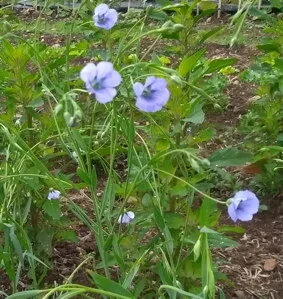 ‘Sussex Flax’
Flax also known as Linseed is grown both for fibre production (linen is woven from flax fibre) and for the oil rich seeds. Commercially these are processed into oil for food and other uses.
This variety grows around 1m tall & produces large numbers of gorgeous dark golden brown seeds which you can use toasted in flapjacks, sprinkled on your porridge etc.
Flax plants make beautiful clear blue flowers and are great planted in drifts as a cottage garden ornamental and also for cutting.
Sow in March / early April.
Easy to grow both for the flowers and the edible seed.
 approx 200 seed, organic. £2.70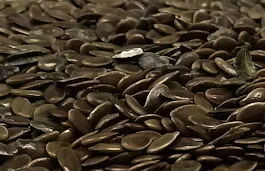
Growing Amaranth as a Grain
Quinoa and amaranth are technically ‘pseudograins’, as they’re not from grasses. They’re a much better choice for home or allotment growers though compared to traditional grains like wheat or oats, as they produce better on a small scale and are easier to harvest & process without specialist equipment.
The two are sown and harvested similarly – see the packet and your invoice for full details, as well as the harvest instructions in our reference section.
Sowing Information
(swipe to scroll)
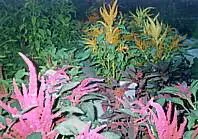 ‘Mixed Grain Amaranths’
These make up to 200,000 seed per plant, are very easy to thresh. The seeds don't need grinding - you just add them to whatever you are cooking. This is our own special mixed population bred from our trials - we have been working on this for about 20 years now. It produces early, and gives a good yield of seed that is easily threshed. Very filling and nutritious, we add it to rice when cooking, it adds both flavour and protein. Simple harvesting instructions supplied.
3-4ft tall mix. Spectacular red - pink - yellow flowers. High-yielding and early.
 £2.72
£2.72Quinoa
Quinoa is a high-protein grain you can easily grow at home. It is cooked just like rice, and as well as tasting good, it is rich in lysine, giving a good nutritional balance to your meal.
The grain is naturally protected from insects, rodents and birds by a yellow soapy coating that tastes bitter. This is easily removed – by soaking the seed overnight to soften the soap, then rubbing it and rinsing several times in cold water before cooking. It’s no more hassle than soaking dried beans before you use them, and means that you lose less of the crop to the beasties in your garden.
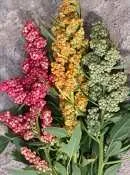 ‘Rainbow’ Quinoa
This is a diverse population of different colours all selected for an open flower-shape that sheds water easily and helps grow good seed even in slightly damper climates (like, for example, the west coast of Wales where we are . . .)
Note that at first you might question the name - as it starts to grow, it seems to be just different shades of green. But wait patiently! As the seed ripens, they do indeed go all different colours, making an impressive display.
It does very well for us, reaching about 6 feet tall by the end of July, even in colder years. The plants flower in July/August, and seed is ready in Sept/Oct.
Bred for home gardeners.
200 seed, organic. £2.66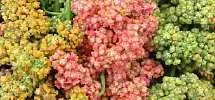
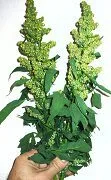 ‘Temuco’ Quinoa
From South America, & has very open seed-heads that help shed the rain. A good choice for the wetter or windier parts of the UK, we find that this is always a heavy producer.
Quinoa seeds are yellow when harvested (see picture) and are just soaked in water to remove the coating of natural saponins before cooking (otherwise they taste 'soapy'). This is why bought seed is white - it's been pre-washed for you. The advantage of this 'soapiness' is that it puts off the birds from eating the seed, so less need for netting or small boys throwing stones!
Both drought and wet tolerant. Instructions for seed collection included but it's pretty simple!
200 seed, organic. £2.29