


 Boddingtons Soup Pea - VERY RARE
A productive soup pea from the Clydach valley in Wales. We haven't been able to trace much of its history, but have been impressed with its performance, particularly the extremely difficult summer of 2012.
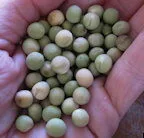
This variety has smooth greeny-grey seeds, that make a traditional UK style pea soup or tasty mushy peas (if you prefer a darker coloured pea, look at the Latvian variety below). Allow for growth to 6 foot plus, so make frames for them as you would runner beans or climbing french beans.
With all our rare peas, we recommend starting in modules to avoid losses to mice who will happily steal all your freshly planted valuable pea seed!
 approx 100 seed, organic. £2.52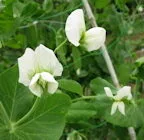
 Latvian Soup Pea -VERY TASTY
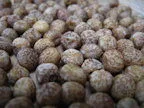
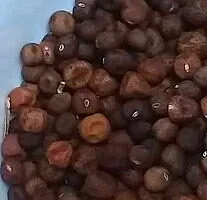
The Latvian pea is again very productive and tall growing, so needs sturdy supports. It has really beautiful tan seeds speckled with a darker brown, obviously great for use in soups, but also good in other dishes that use dried pulses.
Our friend Daniel makes a delicious 'hummus' with this variety. It also has pretty purple flowers which look very attractive in the garden.
Again a smaller starter packet - but given a year or so you should be able to provide peas to most of your neighbourhood without much difficulty!
about 60 seed, organic. £2.98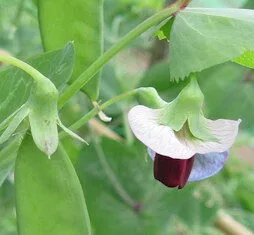
 Raatviksaart soup Pea
Mentioned by Linnaeus in 1741, this traditional soup pea is multipurpose - not just dried for soups, but sweet enough to eat fresh when very young, & also ground to make flour for bread and porridge. It's a medium-tall variety growing to around 5 foot in a typical year.
Sent to us by Jake Whitson in Sweden, who said:
“from the county to the north of us (Dalarna) where they have very hard winters, and the plants which we planted a little late survived into the winter through temperatures of -8C”
Grown in Rättvik until 1900, then thought lost until regenerated from a small sample in a seedbank.
approx 50 seed, organic. £2.99Roveja Semi-dwarf soup Pea
A very ancient variety of peas, today cultivated in only in a few mountainous Appenine regions in Italy. Thanks also to its relatively problem-free cultivation this variety has been rediscovered in recent years and it did well for us in Wales in 2017.
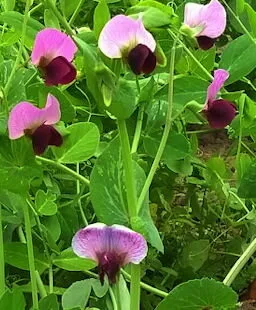
The plants are semi-dwarf - you can let them sprawl, but we'd suggest supporting them with pea sticks or low netting for the best crop. They are absolutely beautiful, with bi-coloured pink-purple flowers fading to pale pink/white as they age. They're allowed to mature and dried, then used for delicious winter soups and stews.
Tasty and beautiful! An ancient variety that is still well worth growing.
80 seed, organic. £2.46